How Often Should You Moisturize a New Tattoo?
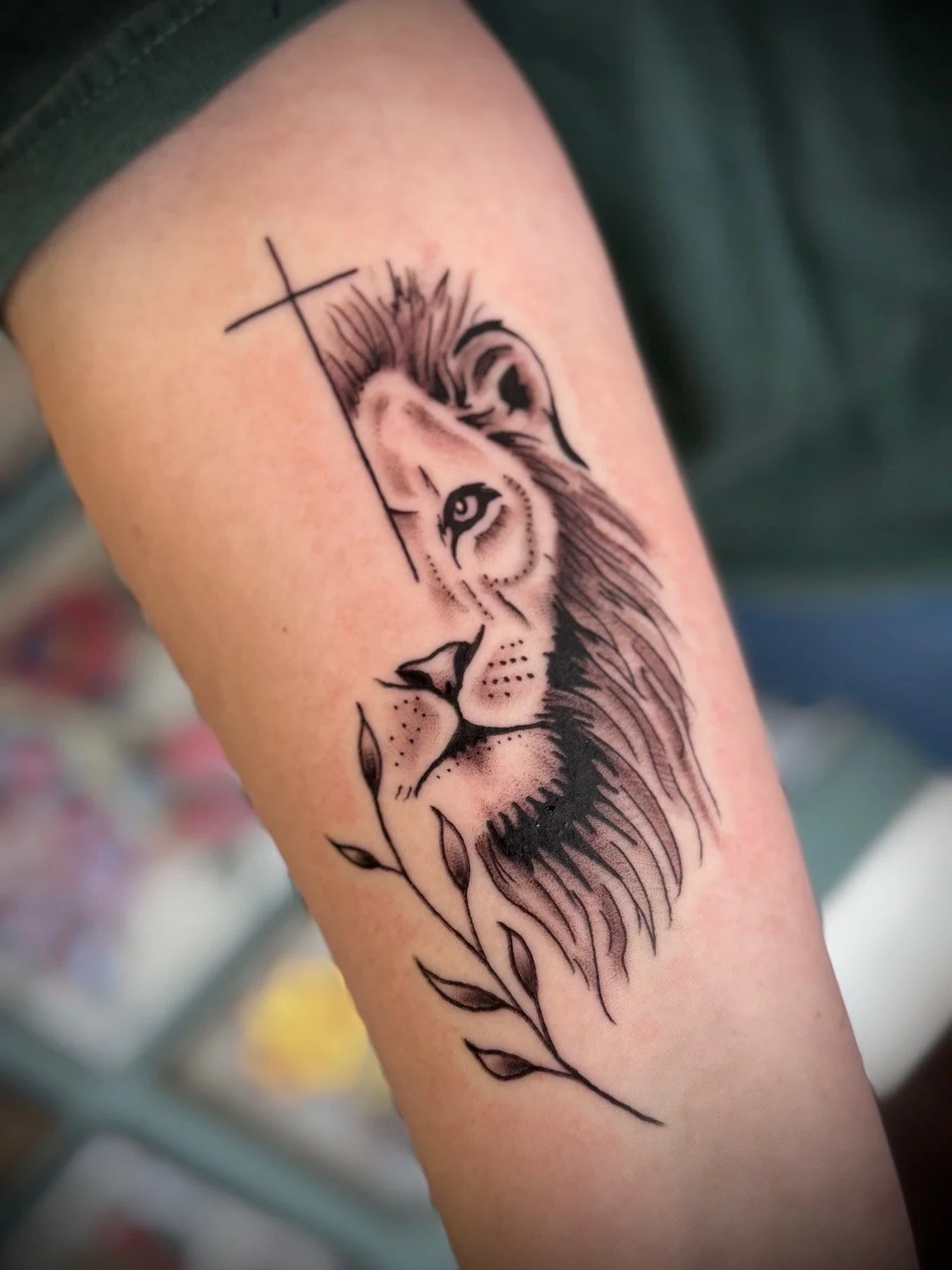
One of the most common questions after getting a tattoo is surprisingly simple:
How often should I moisturize it?
Too little moisturizer can leave healing skin feeling dry, tight, and uncomfortable. Too much can leave the tattoo overly greasy, sticky, or difficult to care for properly.
The answer is not about keeping your tattoo covered in lotion all day. It is about applying an appropriate amount when the healing skin needs it and adjusting your routine as the tattoo progresses through different stages of healing.
For clients getting tattoos in Kennesaw, your artist's specific aftercare instructions should always take priority because the recommended routine can depend on the tattoo, bandage, placement, and products used.
How Often Should You Moisturize a New Tattoo?
For many people, twice a day is a reasonable starting point once the tattoo is ready for moisturizer, but your skin may need more or less depending on how it feels and what your tattoo artist recommends.
Cleveland Clinic's current dermatologist-reviewed tattoo aftercare guidance recommends washing and moisturizing twice daily during the early healing period. It also notes that once the tattoo has healed, moisturizer can be applied as needed. (Cleveland Clinic tattoo aftercare guidance)
The American Academy of Dermatology takes a slightly more condition-based approach, recommending a water-based lotion or cream when tattooed skin feels dry. (American Academy of Dermatology tattoo skin care)
So instead of thinking:
"I need to moisturize my tattoo every few hours."
Think:
"I need to keep the healing skin appropriately moisturized without overloading it with product."
The First Day Is Different From the Rest of Healing
Don't automatically apply moisturizer immediately after leaving the tattoo studio.
Your artist will typically give you instructions for the bandage or protective covering, including when it should be removed and what to do afterward.
Some modern tattoo coverings can remain in place for a period specified by the artist. The care routine begins after the covering is removed according to those instructions.
Once you are told to wash the tattoo and begin moisturizing, gently clean it and follow the recommended product and application instructions.
If you're unsure when to start moisturizing, ask your Kennesaw tattoo artists rather than copying an aftercare routine from another person's tattoo.
Different tattoos can have different aftercare needs.
How Much Moisturizer Should You Use?
This is where many people go wrong.
A new tattoo does not need a thick layer of lotion sitting on top of the skin.
You generally want a thin, even layer rather than a heavy coating.
After applying moisturizer, the skin should feel comfortable rather than excessively greasy or wet.
If you can see a thick layer of product sitting on top of the tattoo, you may have applied more than necessary.
Think of moisturizer as something that supports the skin rather than something that needs to remain visibly present throughout the day.
A simple application routine
Wash your hands.
Clean the tattoo according to your artist's instructions.
Gently pat the area dry.
Allow the skin to settle if instructed by your artist.
Apply a small amount of the recommended moisturizer.
Spread it gently over the tattoo.
Leave the skin lightly moisturized rather than heavily coated.
Don't aggressively rub the product into freshly tattooed skin.
How Do You Know When Your Tattoo Needs Moisturizer?
Your skin can give you useful clues.
A healing tattoo may need additional moisture when it feels:
Dry
Tight
Flaky
Uncomfortably itchy
Rough as the skin peels
The American Academy of Dermatology recommends applying a water-based lotion or cream when tattooed skin feels dry. (AAD tattoo care recommendations)
That means you do not necessarily need to keep applying moisturizer simply because you have a tattoo.
If the skin feels comfortable and appropriately moisturized, adding more product every hour is unlikely to provide additional benefit.
Can You Over-Moisturize a New Tattoo?
Yes, and more is not necessarily better.
Applying excessive amounts of moisturizer can leave the tattoo wet, greasy, or occluded. It can also make clothing stick to the area and encourage unnecessary touching.
The goal is balance.
You want to avoid allowing the skin to become excessively dry while also avoiding the temptation to continually cover it with product.
This is particularly important during the peeling stage, when some people assume that every visible flake needs to be immediately covered with another layer of lotion.
Let the skin heal naturally.
Do not peel, scratch, or manually remove flakes.
What Type of Moisturizer Should You Use?
Follow your tattoo artist's recommendation, particularly during the first stage of healing.
The American Academy of Dermatology recommends a water-based lotion or cream when tattooed skin feels dry and advises against petroleum-based products because they can contribute to tattoo fading. (AAD tattoo skin care)
Cleveland Clinic's dermatologist guidance similarly recommends a simple moisturizer or recommended ointment during early healing and advises against petroleum jelly on healing tattoos. (Cleveland Clinic tattoo aftercare)
When choosing a product, avoid assuming that an expensive or heavily marketed tattoo product is automatically better.
Your tattoo artist can recommend an appropriate option based on their aftercare protocol.
Does Fragrance Matter?
Healing tattooed skin is sensitive, so introducing unnecessary ingredients is not always helpful.
A simple, fragrance-free product may be preferable during the healing period, particularly if your skin is sensitive.
Cleveland Clinic recommends a mild, fragrance-free soap for washing a new tattoo and a simple moisturizer during early healing. (Cleveland Clinic tattoo aftercare)
If you have previously reacted to skincare products, discuss your options with your healthcare professional or tattoo artist before applying something new to freshly tattooed skin.
Should You Moisturize a Tattoo at Night?
You can include moisturizing in your evening routine if your artist recommends it.
For many people, morning and evening application is easier to remember than trying to follow an arbitrary schedule throughout the day.
The important part is not the exact clock time.
It is the condition of the skin and the aftercare instructions you were given.
For example, if your tattoo is comfortably moisturized in the evening, you do not need to wake up in the middle of the night to apply another layer.
What Happens During the Peeling Stage?
Peeling can make people think they need to increase their moisturizer use.
This is where patience becomes important.
During the first couple of weeks, a tattoo may itch, flake, or develop small scabs as the skin recovers. Cleveland Clinic notes that itching and flaking can occur during the first two weeks and recommends continuing appropriate washing and moisturizing during this stage. (Cleveland Clinic tattoo healing guidance)
Moisturizer can make the skin more comfortable, but it does not need to stop the natural peeling process.
Do not try to moisturize the flakes away.
Let them come off naturally.
When Should You Reduce Moisturizing?
As the tattoo heals, you generally do not need to maintain the same intensive aftercare routine indefinitely.
Cleveland Clinic notes that after around two months, the surface of the skin is typically healed, although deeper layers can continue healing for longer. At that point, moisturizer can be used as needed. (Cleveland Clinic tattoo aftercare)
Your tattoo may therefore move through something like this:
Early healing
Follow your artist's specific instructions closely and moisturize as directed.
Peeling stage
Continue appropriate moisturizing while allowing the skin to naturally flake and recover.
Later healing
As the skin becomes comfortable and stops peeling, you can gradually move away from a structured tattoo-specific routine.
Fully healed tattoo
Moisturize when your skin needs it, just as you would with other healthy skin.
The exact timing varies, so don't use a calendar alone to decide when your tattoo is healed.
What About Kennesaw's Heat and Humidity?
Kennesaw's warm weather can make tattoo aftercare feel different depending on the season and your daily activities.
If you're sweating heavily, it does not mean you should compensate by repeatedly applying moisturizer.
Sweat and moisturizer are not the same thing.
If you have a new tattoo during hot weather, pay attention to:
Sweat accumulating around the tattoo
Clothing rubbing against the area
Outdoor sun exposure
Exercise
Swimming
Dirt or other environmental exposure
If you're planning a new tattoo in Kennesaw, consider your schedule before choosing your appointment date.
A tattoo placed immediately before a week of outdoor activities, intense workouts, or swimming may require more planning than one done during a quieter period.
Southern Ink Kennesaw's existing tattoo healing guide also explains how tattoo size, placement, skin response, and aftercare can influence the healing process.
Does Your Tattoo Placement Change How Often You Moisturize?
It can change how the tattoo feels and how easy it is to care for, even though there is no universal moisturizing schedule based solely on body location.
A tattoo on the thigh may experience clothing friction.
A tattoo near a joint may move frequently.
A back tattoo may be difficult to reach consistently.
A foot or ankle tattoo may have repeated contact with footwear.
The important consideration is not:
"Does this body part require moisturizer three times a day?"
Instead ask:
"What is happening to the skin in this location?"
If friction, dryness, or other factors are making the tattoo uncomfortable, ask your artist whether your aftercare routine should be adjusted.
What If the Tattoo Feels Extremely Dry?
Some dryness and flaking can be part of normal healing.
If your skin feels uncomfortably dry, use the moisturizer recommended for your healing tattoo rather than repeatedly applying large amounts.
If the skin becomes cracked, painful, increasingly red, unusually swollen, or develops other concerning symptoms, don't assume the solution is simply more moisturizer.
The American Academy of Dermatology recommends seeing a dermatologist if tattooed skin develops a reaction or changes in a concerning way. (AAD tattoo skin care guidance).
What If Your Tattoo Is Too Oily or Sticky?
That's often a sign that you're using too much product.
You do not need to strip the tattoo aggressively to correct it.
Instead, follow your artist's cleaning instructions and use a smaller amount during the next application.
The goal is a comfortable, lightly moisturized surface, not a visibly glossy layer of lotion.
Don't Confuse Moisturizer With Sunscreen
During the healing stage, sun exposure should be minimized and your artist's instructions should be followed.
Once your tattoo has healed, sun protection becomes an important part of long-term tattoo care.
The AAD recommends broad-spectrum, water-resistant sunscreen with SPF 30 or higher for tattooed skin exposed to the sun. UV exposure can fade tattoo ink over time. (AAD tattoo sun protection)
So there are really two different routines:
Healing: follow your tattoo artist's aftercare instructions.
Long-term care: moisturize when your skin is dry and protect exposed tattooed skin from UV radiation.
When Should You Stop Treating It Like a Fresh Tattoo?
One of the easiest ways to overcomplicate tattoo aftercare is to continue treating a fully healed tattoo like an open wound.
Once the skin has finished peeling and the surface looks and feels normal, you can generally transition to ordinary skincare.
You do not need a special tattoo moisturizing ritual forever.
A healed tattoo benefits from healthy skin care, including keeping the skin moisturized when it is dry and protecting it from excessive UV exposure.
The goal is to maintain healthy skin, not constantly apply products to the tattoo.
When Should You Contact a Healthcare Professional?
Moisturizer should not be used as a solution for symptoms that could indicate a medical problem.
Seek medical advice if your tattoo develops concerning symptoms such as:
Increasing pain
Spreading redness
Significant swelling
Pus or unusual drainage
Skin that becomes increasingly hot
Fever
Red streaks extending from the tattoo
A persistent or unusual rash
Symptoms that continue to worsen instead of improve
Cleveland Clinic identifies increasing pain, expanding redness, fever, significant drainage, and red streaks as warning signs that warrant medical attention. (Cleveland Clinic tattoo aftercare)
Your tattoo artist can explain the expected healing process, but a healthcare professional should evaluate suspected infections or significant skin reactions.
Frequently Asked Questions
How many times a day should I moisturize a new tattoo?
Twice daily is a common starting point during early healing, but follow your tattoo artist's specific instructions. Cleveland Clinic currently recommends moisturizing twice daily during the first weeks of healing. (Cleveland Clinic)
Can I moisturize my tattoo too much?
Yes. Applying excessive product can leave the tattoo greasy and may cause unnecessary irritation. Use a thin layer rather than repeatedly coating the skin.
Should I moisturize my tattoo every time it feels itchy?
Not necessarily. Itching is common during healing, but adding more moisturizer every time the tattoo itches is not always necessary. Avoid scratching or picking and follow your aftercare routine.
When can I stop moisturizing my new tattoo?
Once the tattoo has healed and the skin no longer needs specialized aftercare, you can moisturize it as needed like the rest of your skin.
What moisturizer is best for a new tattoo?
Follow your tattoo artist's recommended product. The AAD recommends a water-based lotion or cream when tattooed skin feels dry and advises avoiding petroleum-based products. (AAD)
Can I use regular body lotion on a new tattoo?
It depends on the product and your artist's aftercare instructions. A simple, fragrance-free moisturizer may be appropriate, but freshly tattooed skin is not the time to experiment with heavily fragranced or irritating products.
Should I moisturize my tattoo before bed?
If your tattoo is ready for moisturizer and your artist recommends it, evening application can be part of your routine. You do not need to repeatedly reapply moisturizer throughout the night.
The Bottom Line for New Tattoos in Kennesaw
There is no prize for using the most moisturizer.
The goal is to keep healing skin clean, comfortable, and appropriately moisturized while allowing the natural healing process to happen.
For many people, moisturizing around twice a day during early healing is a practical starting point, but your tattoo artist's instructions should come first. As the skin stops peeling and becomes fully healed, you can transition to moisturizing as needed.
If you're planning custom tattoos in Kennesaw, ask your artist about your specific aftercare routine before leaving the studio. Your tattoo's size, placement, covering, and the artist's process can all affect what they recommend.
And remember, moisturizer is only one part of tattoo aftercare.
Gentle cleaning, avoiding unnecessary friction and scratching, limiting sun exposure during healing, and recognizing unusual symptoms are equally important.
Helpful Resources
Disclaimer: This article provides general educational information and is not medical advice. Follow the aftercare instructions provided by your tattoo artist. If you experience signs of infection, a significant skin reaction, or symptoms that are getting worse instead of better, contact a qualified healthcare professional.