How Do You Choose the Best Tattoo Shop in Kennesaw, GA?
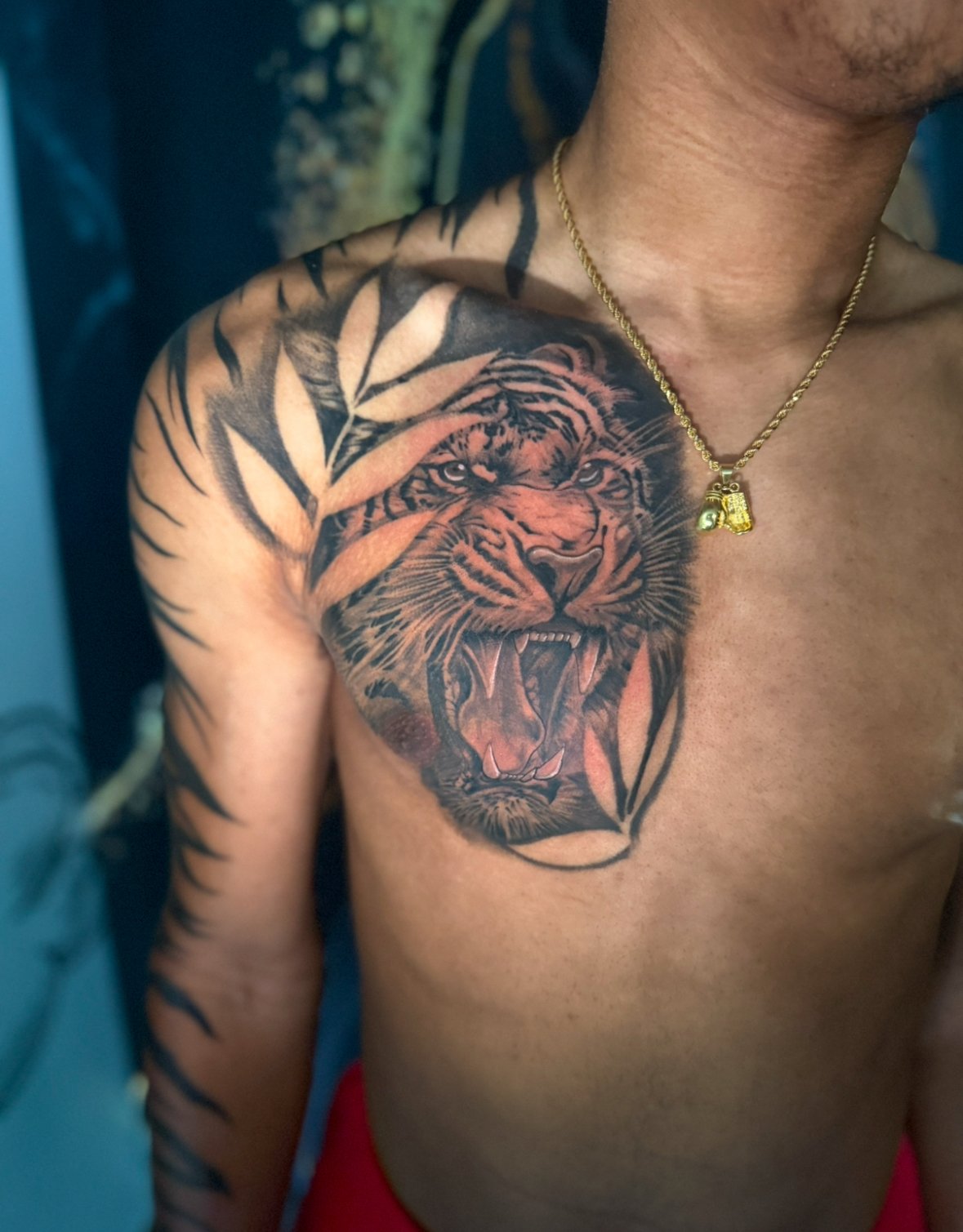
Choosing a tattoo shop in Kennesaw, Georgia, is about more than finding a studio with attractive artwork or a convenient appointment time. A tattoo is a long-term decision, and the quality of your experience can depend on the artist's skills, the studio's safety practices, the communication you receive, and the aftercare support provided after your appointment.
The best tattoo shop for one person may not be the right choice for someone else. A client looking for a realistic portrait needs a different artistic skill set from someone seeking fine-line lettering, traditional designs, illustrative work, or a custom piece inspired by personal experiences.
So, what should someone actually look for when choosing a tattoo studio in Kennesaw, GA?
Start with the artist's portfolio, then evaluate the studio's hygiene practices, communication, consultation process, licensing, reviews, pricing, location, and booking procedure. Looking at all these factors together helps you make a more informed decision instead of relying on a single photograph, review, or low price.
1. Start With the Tattoo Artist's Portfolio
A studio's overall reputation matters, but the individual artist creating your tattoo matters just as much. Every artist has their own strengths, preferred techniques, and experience with different designs.
A portfolio gives you an opportunity to examine the artist's actual work rather than relying on promotional descriptions.
What should you look for in a portfolio?
Pay attention to:
Consistency across multiple tattoo pieces.
Clean and controlled linework.
Shading that suits the selected style.
Smooth transitions in black-and-grey work.
Proportion and detail in realistic designs.
How tattoos look after healing, when healed examples are available.
Designs placed on different areas of the body.
Original work instead of an extensive collection of copied internet images.
A portfolio should help you understand what the artist can reliably create. One impressive photograph does not necessarily represent the artist's overall experience.
Look for work similar to your idea
If you want a realistic animal tattoo, review the artist's realistic animal work. If you want lettering, look for examples of lettering with similar size and complexity. If you want a custom sleeve, examine larger projects and how the artist connects different elements.
You do not have to find an artist who has created your exact concept. You do need to find someone whose skills match the visual direction and technical demands of your design.
2. Match the Artist's Style to Your Tattoo Idea
Not every tattoo artist specializes in every style. Some focus on traditional tattoos, while others prefer realism, neo-traditional, fine-line, blackwork, illustrative designs, or color work.
Choosing an artist only because the studio is nearby can create a mismatch between your expectations and the artist's strengths.
Ask these questions before booking
Does the artist regularly create the style I want?
Do their designs have the level of detail I am expecting?
Are their healed tattoos available for review?
Do they have experience with the placement I selected?
Can they explain how the design may change as it ages?
The best fit depends on the actual project. A tattoo shop in Kennesaw may have several artists, but you should still evaluate each artist individually.
If you are still developing your concept, browse custom tattoo ideas and tattoo services to explore possible directions before arranging a consultation. Use the reference only as inspiration and confirm the artist's actual portfolio before making a decision.
3. Evaluate Hygiene and Studio Safety
Hygiene should be one of the first things you evaluate, not an issue you consider only after choosing an artist.
Tattooing involves contact with blood and bodily fluids, so proper infection-control practices are essential. A professional studio should be able to explain its procedures for preparing the work area, using sterile equipment, disposing of sharps, and protecting clients and artists.
What should a clean tattoo studio demonstrate?
Look for practices such as:
Handwashing facilities that are accessible and properly maintained.
Fresh gloves used appropriately during the procedure.
Single-use items opened when needed.
Proper handling and disposal of needles and other sharps.
Cleaning and disinfection of work surfaces between clients.
Suitable barriers on equipment where required.
A clear separation between clean supplies and used materials.
A professional environment where safety questions are taken seriously.
You should not feel uncomfortable asking how the studio manages hygiene. A responsible artist should be able to explain the process clearly without dismissing your concerns.
Georgia's body art requirements
Georgia has statewide body art rules covering studios and individual body artists. The regulations address studio permits, artist certification, infection-control procedures, equipment, client records, and aftercare information.
The Georgia Department of Public Health Body Art Program provides information about certification and studio requirements. Georgia's Body Art Rules and Regulations also outline standards for permitted studios and certified body artists.
These requirements provide a useful starting point when evaluating a tattoo studio in Kennesaw. You can ask the studio how it maintains compliance and where the required permits or certifications are displayed.
4. Treat the Consultation as Part of the Service
A consultation is not simply a conversation about the price. It is an opportunity to determine if the artist understands your idea, can explain realistic options, and is comfortable discussing the details that affect the finished tattoo.
A good consultation should allow you to talk about:
The concept and meaning behind the tattoo.
Preferred size and placement.
Style, color, and level of detail.
Reference images and what you like about them.
Design limitations related to anatomy or skin.
Expected appointment length.
Estimated pricing.
Healing and aftercare requirements.
You should be able to ask questions without feeling rushed. The artist should also be willing to explain when an idea needs to be adjusted for readability, longevity, or placement.
Watch how the artist responds
Communication during the consultation can reveal a great deal about the future experience. An artist may suggest changes because a design will not translate well at a small size or because certain details could become difficult to maintain over time.
That does not automatically mean the artist is rejecting your idea. A productive discussion helps balance your creative vision with practical tattooing considerations.
5. Check Licensing, Certification, and Studio Permits
Licensing and certification should not be overlooked when choosing a tattoo studio in Kennesaw.
Georgia's body art regulations distinguish between Body Artist Certification and a Body Art Studio Permit. The rules state that body artists must hold the appropriate certification and perform body art at a permitted studio, subject to the applicable requirements.
The Georgia rules also require body artist certifications to be posted where clients can readily observe them. You can ask to see the relevant certification and studio permit if you have questions.
What should you verify?
Ask:
Is the artist certified for the type of body art being performed?
Does the studio have the required permit for its location?
Are certifications and permits current?
Does the studio follow applicable health and safety requirements?
Can staff explain where clients can raise safety concerns?
Avoid assuming that a studio is compliant solely because it has a professional-looking website or a large social media following. Verification and direct questions are more useful than appearances.
6. Pay Attention to Communication Before the Appointment
Your experience with a tattoo shop begins before you enter the studio. The way staff respond to inquiries can help you understand how organized and transparent the booking process may be.
Good communication does not require an artist to respond immediately at all times. Tattoo artists often work long appointments and may not be able to answer messages while tattooing. However, the studio should provide clear information about expected response times, deposits, consultations, and appointment requirements.
Signs of clear communication
Look for:
Direct answers to questions.
Clear instructions for submitting ideas.
Information about deposits and cancellation policies.
Realistic expectations about design timelines.
A professional explanation of pricing.
Clear instructions about what to bring to the appointment.
A way to ask follow-up questions before the session.
Be cautious when important terms are vague or change repeatedly. Confirm the main details in writing before paying a deposit.
7. Read Reviews for Patterns, Not Just Ratings
Reviews can help you understand how a tattoo studio treats clients, but a star rating alone cannot tell you if a studio is suitable for your specific tattoo.
Instead of focusing only on the average rating, read multiple reviews and look for recurring patterns.
What can reviews help you evaluate?
Look for comments about:
Artist professionalism.
Communication before the appointment.
Cleanliness and comfort.
Respect for client preferences.
Consultation quality.
Appointment organization.
Design accuracy.
Healing and aftercare support.
How the studio responds to concerns.
Reviews are individual experiences, not a substitute for evaluating an artist's portfolio and safety practices. A review about a small minimalist tattoo may not tell you much about the artist's ability to create a large realistic piece.
Also, avoid assuming that every negative review proves a studio provides poor service. Consider the details, the studio's response, and whether similar concerns appear repeatedly.
8. Understand Pricing Before You Commit
Price is an important part of choosing a tattoo shop, but the lowest quote is not automatically the best value.
Tattoo pricing can depend on the artist's experience, design complexity, size, placement, color, session length, and whether the project requires multiple appointments. Studios may use hourly rates, minimum charges, flat project prices, or a combination of these methods.
Questions to ask about pricing
Is the quote hourly or based on the complete project?
Is there a minimum charge?
Is the consultation free or paid?
Is the deposit applied to the final price?
What happens if the design changes?
Are touch-ups included, and under what conditions?
How many sessions might the tattoo require?
What is the cancellation or rescheduling policy?
A transparent artist should be able to explain the pricing structure before you commit.
Why the cheapest quote can be misleading
A low initial quote may not include all sessions, design preparation, or other applicable charges. On the other hand, a higher quote does not automatically guarantee better work.
Compare the artist's portfolio, experience with your chosen style, communication, hygiene practices, and pricing structure together. The objective is to understand what you are paying for.
9. Consider Location and Accessibility
Location matters, particularly when you are planning a large tattoo, multiple sessions, or follow-up visits.
A studio that is easy to reach from your home, workplace, or regular travel route may make the process more manageable. You should also consider parking, appointment hours, accessibility, and the time required to travel to the studio.
Why location affects the tattoo experience
A convenient location can make it easier to:
Attend an initial consultation.
Arrive on time without unnecessary stress.
Return for additional sessions.
Ask questions in person when needed.
Attend a follow-up or professional assessment.
Plan transportation after a long appointment.
Do not choose a studio based on distance alone. A nearby shop still needs to meet your expectations for artist skill, hygiene, communication, and safety.
10. Review the Booking Process Before Paying a Deposit
The booking process should be clear and easy to understand. A professional studio should provide information about available artists, consultations, deposits, appointment dates, and preparation instructions.
Some artists require a consultation before confirming a larger project. Others may accept a detailed inquiry form with reference images and placement information.
What to confirm before booking
Before you pay a deposit, ask about:
The artist assigned to your project.
The appointment date and expected duration.
The deposit amount and payment method.
Deposit refund and transfer policies.
Design approval and revision expectations.
Cancellation and rescheduling rules.
Identification or age requirements.
What you should wear and bring.
Aftercare instructions provided after the appointment.
Avoid paying a deposit without understanding the studio's terms. Save confirmation messages and review the appointment details carefully.
11. Ask About Aftercare Before Getting Tattooed
Aftercare is part of the tattoo service, not an optional extra. The way you care for a new tattoo can affect the healing experience and help you identify potential concerns.
Before your appointment, ask the artist what aftercare instructions they provide and what type of covering will be used. Different products and tattoo placements may require different instructions.
Important aftercare questions
When can the covering be removed?
How should the tattoo be washed?
What type of moisturizer is recommended?
When can I return to exercise?
How should I protect the tattoo from sunlight?
What activities should I avoid during healing?
What signs indicate that I should seek professional advice?
The U.S. Food and Drug Administration's tattoo safety guidance discusses potential risks associated with tattoos and the importance of understanding safety considerations.
A professional tattoo artist should provide clear aftercare instructions and explain when you should contact a healthcare professional if you experience concerning symptoms.
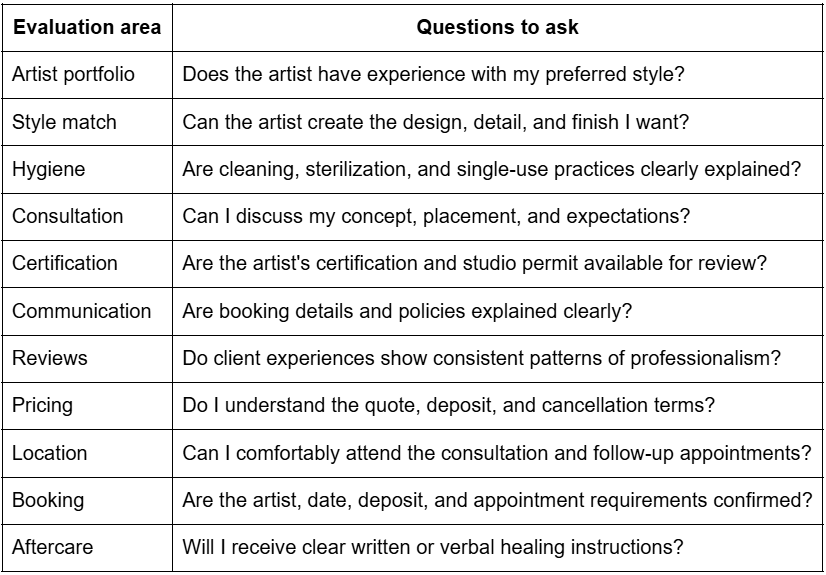
A Practical Checklist for Comparing Tattoo Shops in Kennesaw
If you are comparing several studios, use this checklist before making your final decision.
Questions to Ask During Your First Tattoo Consultation
If you are visiting a tattoo shop in Kennesaw for the first time, prepare a few questions in advance:
Have you created tattoos in the style I want?
Can I see examples of similar work?
What size would you recommend for the design?
How might the placement affect the design?
How many sessions do you expect the tattoo to require?
How is the price calculated?
What is your deposit and cancellation policy?
What aftercare instructions will I receive?
How should I prepare for the appointment?
What should I know about the healing process?
Asking questions does not make you a difficult client. It helps you understand the process and gives the artist an opportunity to explain what is realistic.
Final Thoughts: The Best Tattoo Shop Is the Right Fit for Your Project
Choosing the best tattoo shop in Kennesaw, GA, should involve more than finding the highest-rated studio or the cheapest available appointment.
The right choice depends on how well the artist's portfolio matches your desired style, how confidently the studio handles hygiene and certification requirements, how clearly the team communicates, and how thoroughly the appointment and aftercare process are explained.
Take time to review the artist's work, ask specific questions, read reviews carefully, and understand the full cost before booking. A well-planned tattoo experience begins long before the needle touches your skin.
If you are exploring tattoo concepts, start by identifying the style, placement, and level of detail you want. Then contact a studio for a consultation so you can discuss your idea with an artist who is experienced in that direction.
Frequently Asked Questions
1. What should I look for in the best tattoo shop in Kennesaw, GA?
Look for an artist whose portfolio matches your desired tattoo style, a studio with appropriate hygiene and safety practices, clear communication, valid certifications and permits, transparent pricing, and detailed aftercare guidance. Reviews and location should also be considered.
2. How do I know if a tattoo artist is experienced in my preferred style?
Review the artist's portfolio for several examples of the style you want. Look for consistency in linework, shading, proportions, and detail. Ask if the artist has experience with your preferred placement and the size of your planned tattoo.
3. Should I visit a tattoo shop before booking?
A visit or consultation can help you evaluate the studio environment, ask safety questions, discuss your design, and clarify the booking process. For larger or highly customized tattoos, a consultation may be particularly useful.
4. How can I check if a tattoo shop in Kennesaw is properly permitted?
Ask the studio about its Body Art Studio Permit and the certifications of its artists. Georgia's Department of Public Health provides information about body artist certification and body art studio requirements. Permits and certifications should be available for clients to review as required by applicable rules.
5. Is a higher tattoo price a sign of better quality?
Not necessarily. Price can reflect experience, demand, design complexity, session length, and other factors. Evaluate pricing alongside the artist's portfolio, hygiene practices, communication, and experience with your specific tattoo style.
6. What should a tattoo consultation include?
A consultation may cover the design concept, placement, size, style, color, expected session length, pricing, deposit terms, and aftercare. It should also give you an opportunity to ask questions and discuss realistic design options.
7. Why is aftercare important when choosing a tattoo studio?
Clear aftercare instructions help you understand how to care for your new tattoo during healing and when to seek advice about potential problems. Ask the studio what instructions it provides before booking your appointment.