Which Tattoo Styles Require the Most Detail? A Kennesaw Artist's Guide
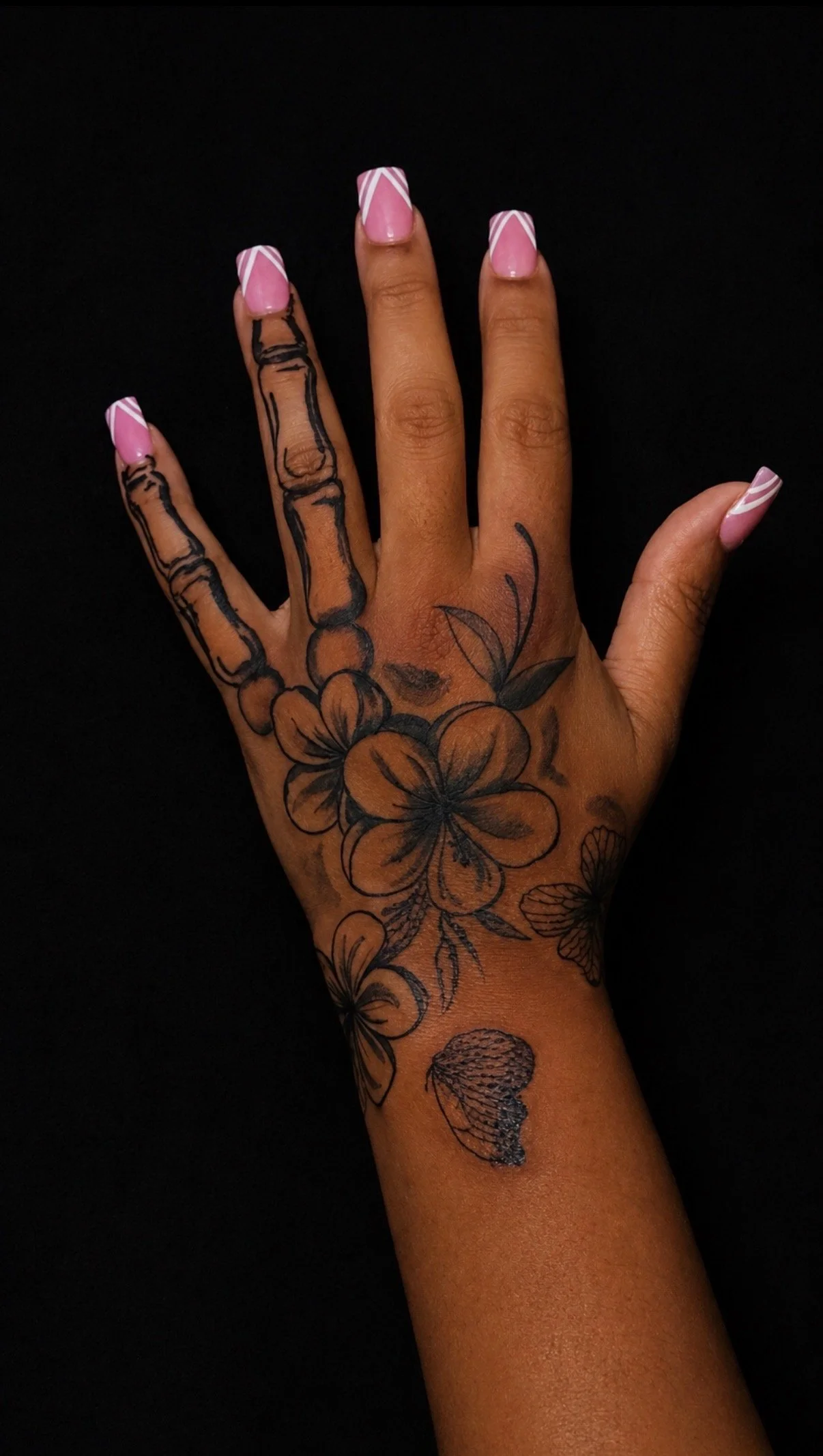
Some tattoos catch your eye from across the room. Others make you want to move closer. You might notice the tiny highlights in a realistic portrait, the delicate lines in a fine-line floral design, or the layers of texture that make an animal tattoo appear almost lifelike.
That level of detail is no accident. Certain tattoo styles require exceptional precision, careful planning, and a strong understanding of how lines, shading, contrast, and skin work together.
At Southern Ink Kennesaw, we know that choosing a tattoo involves more than finding an image you like. The style you choose affects the design process, the time required, and how the artwork may look as it heals and ages.
So, which tattoo styles require the most detail? Realism, fine-line tattooing, micro-realism, intricate illustrative work, and detailed black-and-grey designs can all demand a high level of technical skill. However, the most challenging style depends on the specific design, its size, placement, and the artist's approach.
What Makes a Tattoo Style Detailed?
A detailed tattoo is not necessarily the largest or darkest piece. Detail comes from the amount of visual information an artist needs to create and control.
A tattoo may involve delicate outlines, tiny transitions between shades, layered textures, complex patterns, or subtle changes in color. The artist must organize these elements so the finished design remains readable on the skin.
Several factors influence the difficulty of a detailed tattoo:
Line precision: Small changes in line thickness or direction can affect the appearance of intricate designs.
Shading and contrast: Smooth transitions help create depth, dimension, and realistic textures.
Composition: Multiple elements need to fit together without making the design feel crowded.
Scale: Very small designs leave less room for fine details to remain distinct.
Placement: The body's contours and movement influence how an image fits and appears.
Long-term readability: The artist must consider how fine lines and closely spaced elements may soften over time.
For anyone researching tattoo artists in Kennesaw, looking closely at healed work can be just as informative as reviewing fresh tattoos. Healed examples offer a better view of how the artist's linework and shading hold up after recovery.
1. Realism: Creating the Illusion of Life
Detail level: Very high for complex portraits, animals, and textured subjects.
Realism is one of the most technically demanding tattoo styles because the artist aims to reproduce the appearance of a real subject. This may include a person's face, an animal, a flower, or an object with intricate textures.
A successful realistic tattoo depends on more than copying a photograph. The artist must understand light, shadow, proportions, and the visual features that make the subject recognizable.
For a portrait, even small differences in the eyes, nose, mouth, or facial proportions can change the expression. In an animal tattoo, the artist may need to create the appearance of fur, feathers, scales, or reflective eyes using carefully controlled shading.
Black-and-grey realism relies heavily on tonal contrast. Color realism introduces additional decisions involving hue, saturation, skin tone, and the way different colors interact.
Why does realism require so much skill?
The artist must create the impression of depth on a flat surface while working with the natural characteristics of skin. They also need to decide which details deserve emphasis and which can be simplified without losing the subject's identity.
For clients considering realistic tattoo designs in Kennesaw, a clear reference image and an appropriately sized design can help the artist plan the level of detail realistically.
2. Fine-Line Tattoos: When Every Line Matters
Detail level: High for delicate designs, small lettering, and intricate linework.
Fine-line tattoos are known for their slender outlines and understated appearance. Popular designs include botanical illustrations, delicate symbols, minimal portraits, ornamental patterns, and small decorative elements.
Their simplicity can be misleading. A design with very few lines may leave little room for inconsistencies. A slightly uneven curve or an unintended variation in spacing can change the entire look.
Fine-line work also requires thoughtful planning. Lines that sit too close together may become less distinct over time, while a design that is too small may not leave enough room for every element to remain readable.
That is why a skilled artist may recommend adjusting the size, simplifying a reference image, or increasing the spacing between certain details.
Fine-line tattooing is not simply about using a small needle or making every mark as thin as possible. It involves choosing appropriate line weight, maintaining consistency, and understanding how the design will interact with the skin.
When exploring fine-line tattoo styles in Kennesaw, consider whether the artist's portfolio shows balanced compositions and healed examples, not just delicate-looking fresh work.
3. Micro-Realism: Tiny Tattoos With Big Technical Demands
Detail level: Very high relative to the size of the design.
Micro-realism combines realistic imagery with a relatively small tattoo size. A design might feature a tiny animal, a miniature portrait, a landscape, or an object with several recognizable textures.
The challenge is fitting enough visual information into a limited space. The artist needs to preserve the important features of the subject without overcrowding the design.
For example, a small portrait may need simplified shadows and carefully selected highlights to keep the face recognizable. A miniature landscape may require fewer trees, less texture, or a more restrained color palette than a larger version.
The goal is not to reproduce every pixel in a reference image. It is to create a smaller interpretation that retains the subject's essential characteristics.
Micro-realism also requires realistic expectations. Fine details can soften as a tattoo ages, and closely packed elements may become less distinct. Some concepts work better when enlarged or simplified.
If you love intricate imagery but prefer a smaller tattoo, ask your artist which details are essential and which can be adjusted to improve long-term readability.
4. Intricate Illustrative Tattoos: Many Elements, One Cohesive Design
Detail level: High when the composition includes layered imagery and complex linework.
Illustrative tattoos draw from styles such as drawing, engraving, graphic illustration, and contemporary visual art. They may combine characters, plants, architecture, decorative elements, and patterned backgrounds.
Unlike realism, illustrative work does not always attempt to reproduce a subject exactly as it appears in life. Instead, it may exaggerate shapes, use stylized outlines, or create a distinctive visual language.
The technical challenge is managing all the components without losing clarity.
A complex illustrative tattoo needs a clear visual hierarchy. The viewer should be able to identify the main subject before noticing the smaller decorative elements. If every detail competes for attention, the design may feel crowded.
Artists use line weight, spacing, contrast, and composition to guide the eye through the artwork. They may also remove unnecessary details to give important elements room to stand out.
This is particularly important for sleeves and larger custom pieces, where several images must work together across the body's contours.
5. Ornamental and Geometric Tattoos: Precision Through Pattern
Detail level: High when patterns are dense, symmetrical, or highly intricate.
Geometric and ornamental tattoos rely on shapes, repeated motifs, symmetry, and carefully arranged lines. Examples include mandalas, intricate dotwork, decorative bands, and designs inspired by architectural or mathematical patterns.
These tattoos can appear clean and orderly, but creating that appearance requires careful planning.
Repeated elements need consistent spacing and proportions. Curved patterns must flow naturally, and symmetrical designs need to account for the fact that the body is not a perfectly flat surface.
Dotwork adds another layer of precision. The artist uses carefully placed dots to create gradients, shadows, and texture. The density and distribution of those dots influence the overall appearance.
Placement is particularly important for geometric tattoos. A pattern that looks perfectly aligned on a digital drawing may need adjustments to follow the contours of an arm, shoulder, chest, or leg.
If you are considering an ornamental design, ask how the artist plans to position it on your body rather than judging the concept from a flat image alone.
6. Detailed Black-and-Grey Tattoos: Depth Without Color
Detail level: High when the design depends on subtle tonal transitions.
Black-and-grey tattooing uses black ink, diluted grey tones, and skin as part of the overall visual composition. It can produce dramatic portraits, detailed animals, realistic objects, and layered scenes.
Without color to separate every element, the artist must use contrast and tonal variation to create depth.
Too little contrast can make a design appear flat. Too much darkness can cause neighboring elements to blend together. The artist must balance shadows, midtones, and lighter areas so that the main subject remains clear.
Detailed black-and-grey work may also combine several techniques, such as smooth shading, textured marks, and crisp outlines. Each technique needs to support the same composition.
For a large piece, the artist must consider how the different sections will look together from a normal viewing distance. Fine detail is valuable, but the tattoo should still read as a cohesive image.
Which Tattoo Style Is the Hardest to Execute?
There is no universal answer. The difficulty depends on the design, the artist's specialty, the size of the tattoo, and the placement.
A realistic portrait may demand exceptional control of proportions and shading. Fine-line work may require consistent, delicate linework. A geometric design may place greater emphasis on alignment and symmetry, while an intricate illustrative tattoo may challenge the artist's ability to organize many separate elements.
The most detailed tattoo is not always the most difficult, either. A simpler design can be technically demanding if it depends on perfect spacing, clean shapes, or a small number of highly visible lines.
At Southern Ink Kennesaw, we believe the right approach begins with matching the design to the artist's strengths and discussing what is practical for the chosen size and placement.
If you are planning a custom piece, reviewing tattoo services in Kennesaw can be a starting point for exploring styles and preparing questions for a consultation.
How Can You Choose a Detailed Tattoo That Will Age Well?
The goal is not just to create a detailed tattoo on appointment day. It is to choose a design that remains visually balanced as the skin changes over time.
Here are a few useful considerations:
Choose a suitable size. More complex artwork may need additional space so that important elements remain distinct.
Avoid unnecessary crowding. Every line and texture should serve a purpose.
Look at healed work. Fresh tattoos can appear especially crisp, so healed examples provide useful context.
Consider placement. Areas exposed to frequent friction or sunlight may need additional consideration.
Follow aftercare instructions. Appropriate care during healing helps protect the tattoo as the skin recovers.
Use a reference image as a starting point. A professional artist may need to adapt the image to work effectively as a tattoo.
Sun protection is also important once the tattoo has healed. The American Academy of Dermatology explains practical ways to care for tattooed skin in its guidance on caring for tattooed skin.
Remember that all tattoos change to some extent over time. An experienced artist can help you make informed decisions about scale, spacing, and detail, but no design can be guaranteed to look exactly the same forever.
What Should You Ask Before Booking a Detailed Tattoo?
Before booking an appointment in Kennesaw, prepare a few questions that will help you understand the design process.
Ask to see examples of work in your preferred style, including healed tattoos if available. Discuss how large the tattoo needs to be, how long the session may take, and which parts of your reference image may need to be simplified.
You can also ask how the artist approaches placement, contrast, and long-term readability. These conversations help set realistic expectations before the design is finalized.
At Southern Ink Kennesaw, we value clear communication because the best results begin with a shared understanding of the artwork. A good consultation gives you the opportunity to explain your vision while allowing the artist to recommend adjustments based on technical experience.
Frequently Asked Questions
1. Which tattoo style requires the most detail?
Realism, micro-realism, fine-line work, intricate illustrative tattoos, and detailed geometric designs can all require substantial precision. The most demanding style depends on the specific design and the skills needed to execute it.
2. Are fine-line tattoos harder to create than traditional tattoos?
Fine-line tattoos can be challenging because delicate lines and small details leave little room for inconsistencies. Traditional tattoos have different technical demands, including bold outlines, strong color choices, and clear visual shapes. Neither style is automatically harder in every situation.
3. Do detailed tattoos need to be larger?
Not always, but complex designs often benefit from additional space. A very small tattoo may require simplification to prevent lines and details from becoming crowded or difficult to distinguish over time.
4. Which tattoo styles hold their detail the longest?
Longevity depends on several factors, including design, line spacing, size, placement, skin characteristics, sun exposure, and aftercare. Designs with clear shapes and adequate spacing are often easier to read over time than extremely crowded compositions.
5. How do I find an artist for a detailed tattoo in Kennesaw?
Review portfolios for the specific style you want, examine healed examples when available, and ask about experience with similar designs. A consultation can help you determine whether your idea is suitable for your preferred size and placement.
Final Thoughts: The Best Detail Is Detail With Purpose
The most impressive tattoos are not always the ones with the greatest number of lines or the smallest possible features. They are the ones where every element contributes to a clear, balanced design.
Realism, fine-line tattooing, micro-realism, illustrative work, geometric patterns, and detailed black-and-grey designs each demand their own combination of precision and artistic judgment. Choosing the right style means understanding what makes the artwork effective and how it may change over time.
If you are exploring detailed tattoo designs in Kennesaw, take time to review portfolios, discuss your ideas, and ask how the artist will approach size, placement, and long-term readability.
At Southern Ink Kennesaw, we believe thoughtful planning helps turn a creative idea into a tattoo that feels personal, well-executed, and suited to you.
Disclaimer: This article provides general educational information about tattoo styles and design considerations. Individual results vary, and no tattoo can be guaranteed to retain every fine detail indefinitely. Follow your artist's aftercare instructions and seek medical advice for signs of infection or unusual skin reactions.